Ownership: 100% Terrain Minerals Limited
Location: 350 kilometres north of Perth, within the Murchison Gold Province of Western Australia. The project is contained within contiguous Licenses enclosing a total area of approximately ~170 square kilometres. Additional areas have also been pegged and granted and are 100% owned. The tenements can be accessed via the unsealed Perenjori - Warriedar Road, and thence via extensive historical exploration grid lines, station tracks and fences lines.
Background: Terrain's
Smokebush Gallium Project is positioned between granites and ~8km to
the east of the project's advanced gold targets.
Strategic Opportunity: While the Larin's Lane Project is not
Terrain's flagship project, it represents a potentially large-scale opportunity
for shareholders. Terrain is advancing the project through its proven,
disciplined and staged exploration approach, designed to deliver cost-effective
value creation while progressively de-risking the potential for future
development.
Terrain conducted an extensive MMI soil geochemical
campaign, identifying three polymetallic anomalies that were subsequently drill
tested with 102 air-core holes. The drilling confirmed the presence of rare
earth elements (REE) and gallium and supported the definition of a
JORC-compliant Exploration Target at Larin’s Lane. Covering approximately 27
km², the target represents a potentially large-scale opportunity, with
mineralisation identified at surface in several locations across the broader
target area.
The Company believes this style of deposit
presents a significant opportunity; however, the key to unlocking its potential
is establishing a metallurgical process that can compete economically.
Specialty metals projects are typically advanced through strategic partnerships
or joint ventures, often involving an end user.
Terrain has been working with MRIWA through a Curtin
University study funded by the WA Government and industry, aimed at extracting
REEs and specialty metals. Metallurgical test work evaluating eight separate
and available organic solvents as potential processing pathways identified the methanesulphonic acid (MSA) Leaching process as particularly successful, (See ASX release 2 September 2026).
Key point of Metallurgical study:
- Rare earths confirmed recoverable – metallurgical leaching test work by Curtin University’s C3MET, under MRIWA Research Project M10528 led by RSC, achieved total rare-earth element recovery of 83% from Larin’s Lane clay material (3 M methanesulphonic acid, 50°C, 1 wt% solid-to-liquid, 24 h).
- Recovery increases with pre-treatment – REE recovery rose to up to 99% with thermal pre-treatment (calcination) of the clay prior to leaching at 80°C.
- Scandium credit confirmed – scandium reported as a consistent recoverable credit, with extraction rising to ~67–79% under elevated-temperature and calcined conditions (~46% under mild conditions), offering the potential for an additional critical mineral product stream.
- Gallium upside identified – Ga also brought into solution, improving from ~12–25% under mild conditions to up to 89% with calcination followed by 3 M MSA at 80°C dissolution; head Ga grades are modest (20–24 ppm) and recovery tracks Al dissolution; selective Ga recovery remains subject to further study.
- MSA the standout lixiviant – methanesulphonic acid outperformed the citric and tartaric organic acids tested.
- A lower-impact reagent – high recoveries achieved using MSA, a readily biodegradable, non-oxidising organic acid, rather than the hydrochloric acid (HCl) on which many peer clay-hosted REE recoveries are reported. MSA breaks down in the natural sulfur cycle, is classified as readily biodegradable, and does not generate the chlorine-bearing off-gases associated with HCl leaching, pointing to a potentially lower-impact and lower-hazard processing route.
- An established, off-the-shelf reagent – MSA is a widely used industrial acid available off-the-shelf from major suppliers.
- Foundation for resource and scoping work – the results provide an important technical input to underpin any future Mineral Resource estimate and Scoping Study for Larin’s Lane and confirm the metallurgical amenability of the regolith.
Larin's Lane,
alongside the Lort River REE Project, provides Terrain with an opportunity to
advance two 100%-owned REE projects. Larin's Lane includes a JORC-compliant
Exploration Target established through Terrain's exploration and discovery
work, providing a basis for carefully targeted follow-up studies and future
advancement, strategic partnership, joint venture or divestment opportunities.
Larin's Lane:
Unlocking Gallium Potential
For addition information and references, refer
to ASX releases:
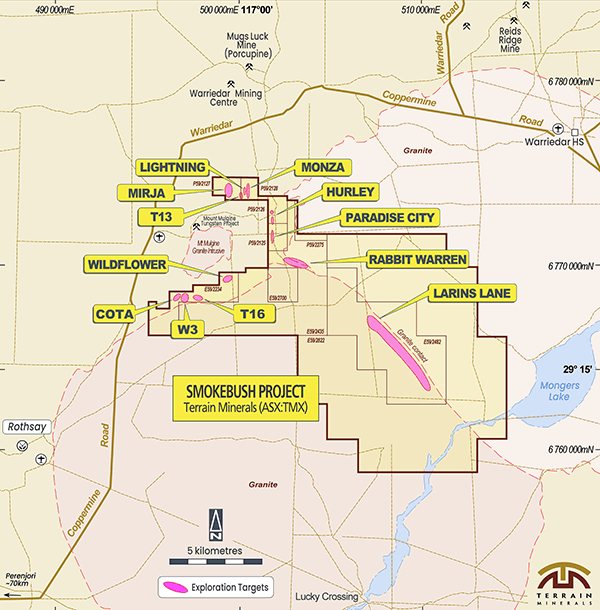
Diagram 1: The Smokebush
project area map showing gold targets and the Larins Lane gallium project.
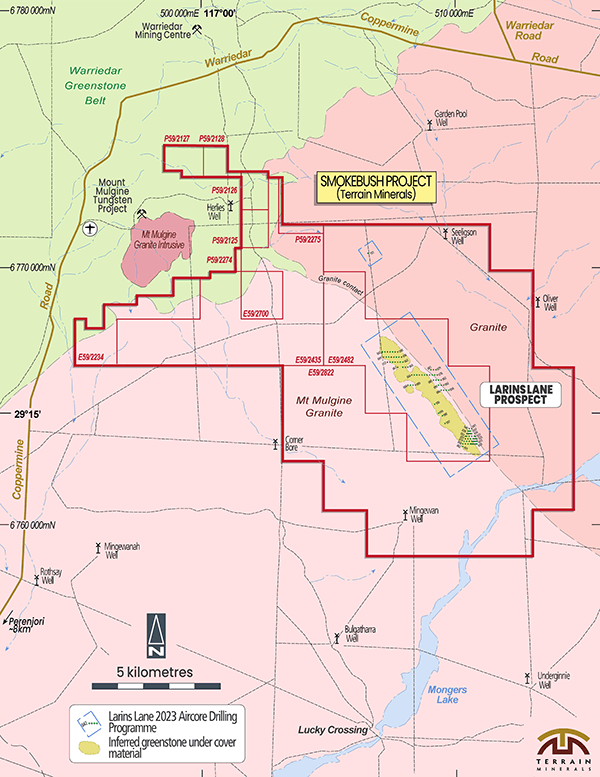
Diagram 2: The Smokebush project area map showing the
Larins Lane gallium project and current drill targets and hole density.
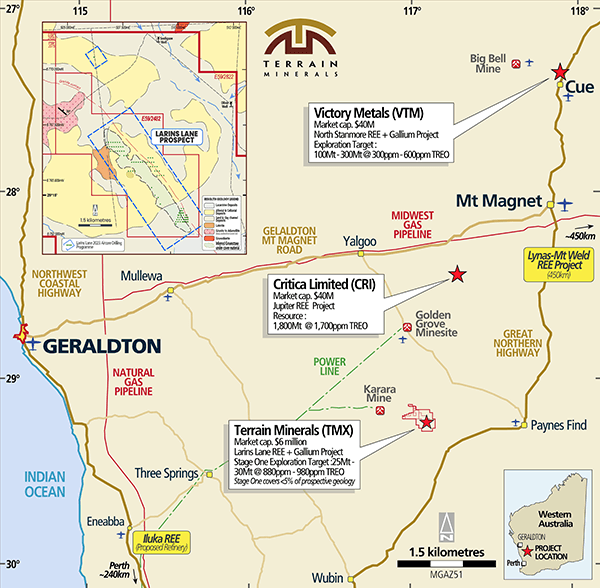
Diagram 3: The Smokebush projects location to other
critical mineral projects.